 Available in US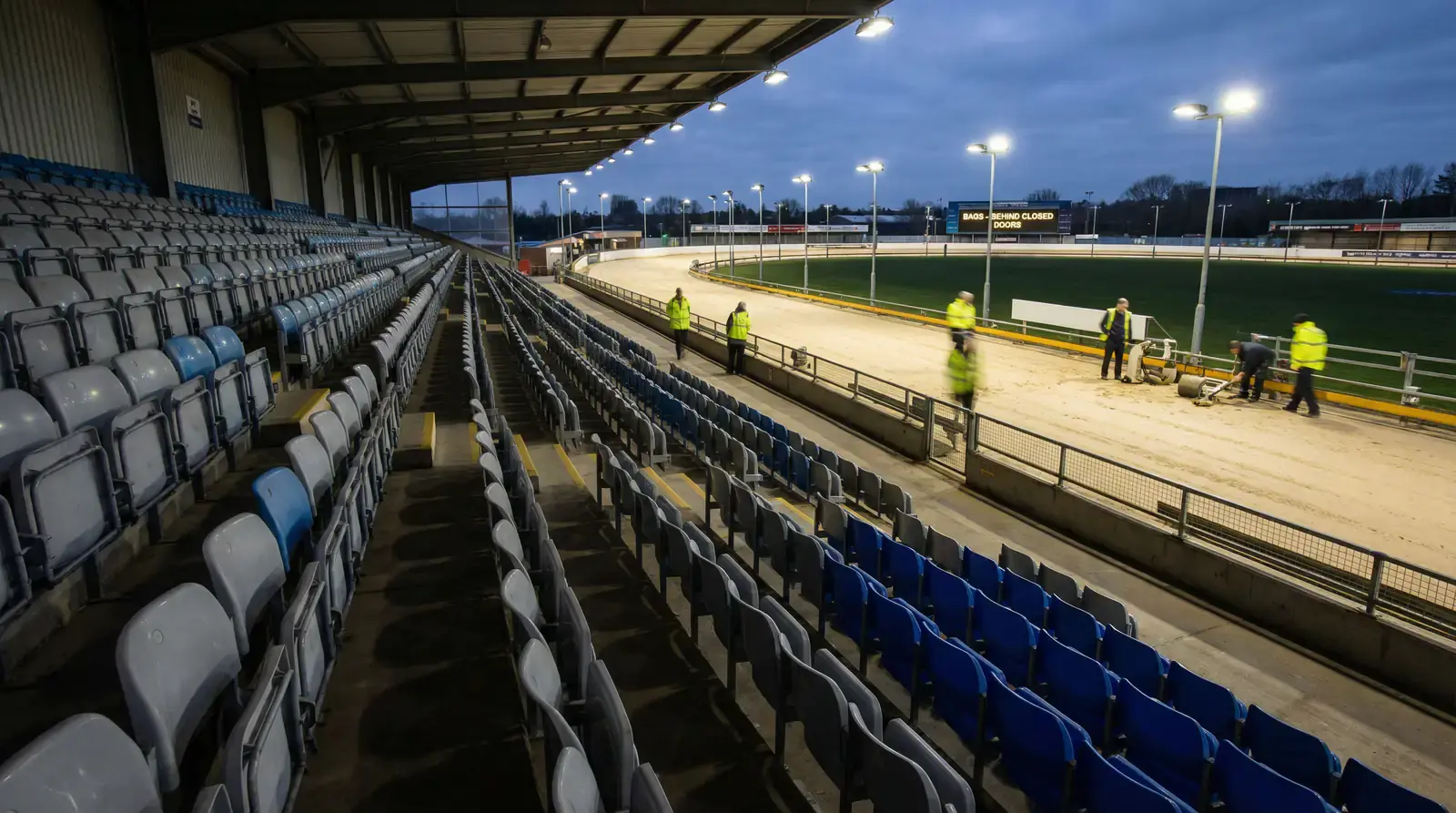
BAGS meetings account for the majority of greyhound races run in the UK on any given day, yet most casual bettors have never been to one. That is because they cannot. BAGS meetings are held behind closed doors with no public admission. The races exist primarily to supply content for bookmaker betting markets and live streaming services, running through the morning and afternoon at tracks across the country while the evening open meetings attract the on-course crowds.
For bettors, BAGS racing is not an afterthought. It is the bulk of the daily schedule, and understanding how it differs from open meetings changes how you assess odds, form, and value.
What BAGS Stands For and How It Works
BAGS stands for the Bookmakers’ Afternoon Greyhound Service, a name that dates back to when the primary function was to provide afternoon racing content for high street bookmaker shops. The format has evolved, but the core concept remains: a schedule of greyhound meetings contracted by bookmakers, run during hours when there is demand for betting content, and produced specifically for remote consumption rather than live attendance.
The mechanics are straightforward. A GBGB-licensed track agrees to host a certain number of BAGS meetings per week. These meetings typically run from mid-morning through mid-afternoon, often starting around 10:30 or 11:00 and finishing by 16:00. The race card is published in advance, the dogs are declared through the normal GBGB process, and the races are conducted under full GBGB rules with regulated stewards, veterinary oversight, and official results.
The key difference is the absence of a live audience. There are no spectators at the track, no trackside bookmakers setting prices on boards, and no atmosphere of a public sporting event. The stands are empty. The only people present are the trainers, kennel staff, racing officials, and the broadcast crew. The races are filmed and streamed live to bookmaker platforms, giving online bettors a visual feed of the action, but the track itself is functionally a production facility rather than a sports venue.
The BAGS contract is the commercial engine that keeps many smaller UK tracks financially viable. The fees paid by bookmakers for the right to offer betting on these meetings represent a significant revenue stream for tracks that might otherwise struggle to sustain a racing programme. Without BAGS income, several smaller venues would likely close. The system creates a symbiotic arrangement: bookmakers get a continuous supply of events to bet on, tracks get guaranteed income, and bettors get a daily programme of racing that runs from morning to evening.
Why Bookmakers Run Behind-Closed-Doors Meetings
The commercial logic is simple: betting requires events. Bookmakers need a constant flow of live sports content to keep their platforms active, their customers engaged, and their turnover moving. Greyhound racing is ideally suited to this need because races are short, fields are standardised at six dogs, and the turnover between races is fast. A single BAGS meeting produces 10 to 14 races in three to four hours, each one a discrete betting event with its own market.
The BAGS schedule fills the gap between morning horse racing and evening greyhound meetings. Without it, there would be extended periods during the day with little live domestic racing content available. Bookmakers recognised this gap decades ago and the BAGS system was developed to fill it. The behind-closed-doors format keeps costs low by eliminating the expense of staffing, catering, and maintaining a venue for public attendance. The entire operation is streamlined for efficiency: race, film, broadcast, settle, repeat.
From the bookmakers’ perspective, greyhound BAGS meetings also offer favourable margin characteristics. The markets are six-runner races with relatively high overrounds compared to horse racing handicaps. The betting public’s knowledge of BAGS form is generally shallower than for evening open meetings, which means market inefficiencies persist. The volume of betting may be lower per race, but the frequency of races throughout the day generates cumulative turnover that justifies the contract costs.
The expansion of online betting and mobile apps has made BAGS racing more accessible than ever. A bettor in 2026 can watch and bet on a BAGS meeting from their phone during a lunch break. Twenty years ago, the same meeting would only have been available on screens inside a bookmaker’s shop. That accessibility has increased the audience for BAGS racing even as the physical trackside experience has remained closed to the public.
How BAGS Affects Odds and Markets
The absence of on-course bookmakers and the lower volume of betting money on BAGS meetings produce markets that behave differently from evening open meetings. Understanding those differences is where the betting opportunity lies.
Starting Prices on BAGS meetings are typically derived from the online market rather than on-course boards. With no trackside bookmakers to set prices, the SP reflects the collective activity of online bettors on the major platforms. The total pool of money shaping these prices is smaller than for evening meetings, which means individual bets have a larger relative impact on the market. A 50-pound bet on a dog in a BAGS meeting can noticeably move the price. The same bet on a high-profile Saturday evening race would barely register.
This lower liquidity creates price inefficiency. Dogs can be overbet or underbet relative to their true chances because the market does not have enough participation to correct itself efficiently. Favourites on BAGS meetings are sometimes shorter than they should be because recreational bettors default to the form pick without considering value. Outsiders can drift to long prices not because they have no chance but because nobody has bothered to analyse them properly.
Early prices on BAGS meetings may be limited. Some bookmakers do not offer early prices on all BAGS cards, displaying SP only until close to the off. When early prices are available, they may be offered with lower maximum stakes than on evening meetings. Best Odds Guaranteed may or may not apply, depending on the bookmaker and the specific meeting. These restrictions are worth checking before you bet, because the absence of early prices and BOG changes the calculation around when and how to place your wager.
Betting on BAGS: Advantages and Pitfalls
The primary advantage of BAGS betting is the availability of form inefficiency. Because fewer bettors analyse BAGS meetings in depth, the market is less efficient than on higher-profile evening cards. A bettor who studies the form, checks the going, and assesses the trap draw can find value more frequently on a Monday afternoon BAGS card than on a Saturday evening open race at a major track where the form is dissected by thousands of punters.
The frequency of racing is another advantage. BAGS meetings run every day, often at multiple tracks simultaneously. This gives disciplined bettors a large menu of races to evaluate, and the ability to be selective is key. You do not need to bet on every BAGS race. You need to identify the races where your analysis produces a clear opinion and the price supports a bet. With 60 or more BAGS races available on a typical day, selectivity is not just possible — it is essential.
The pitfalls are real and worth stating plainly. The lower quality of fields at BAGS meetings means results are often less predictable than evening open racing. The dogs may be less consistent, the form less reliable, and the race-to-race variance higher. A dog that dominated its last BAGS race may face a completely different dynamic next time, with different rivals and a different trap draw, at the same track and distance. The turnover of dogs in BAGS racing is faster, which means form windows can become stale more quickly.
The pace of BAGS racing itself can be a pitfall. With a new race every 15 minutes across multiple tracks, the temptation to bet on volume rather than quality is persistent. It is remarkably easy to place 20 bets on a Tuesday afternoon BAGS schedule without any of them being backed by genuine analysis. This is where bankroll management intersects with BAGS betting: the availability of action is not a reason to bet. It is a reason to be more disciplined about when you do.
Live streaming quality on BAGS meetings is generally good but can vary by track and by bookmaker platform. Some tracks produce clearer feeds than others. If you rely on watching the race live to evaluate dogs for future bets or to monitor your selection’s running style, test the stream quality at your preferred track before committing significant stakes.
The bottom line is that BAGS racing is the workhorse of the UK greyhound betting calendar. It lacks the prestige and the atmosphere of evening open meetings, but it offers more frequent opportunities for value-driven bettors who are willing to put in the work. The key is to approach it with the same analytical standards you apply to any race, rather than treating it as a time-filler between the meetings that matter more. Every race runs under the same GBGB rules. Every dog has real form. The only thing missing is the crowd, and the dogs do not care about that.
